Funding overview: Solar carports & charging infrastructure for companies
Use funding - herald a mobility turnaround
Promotion of solar carports & charging infrastructure for companies
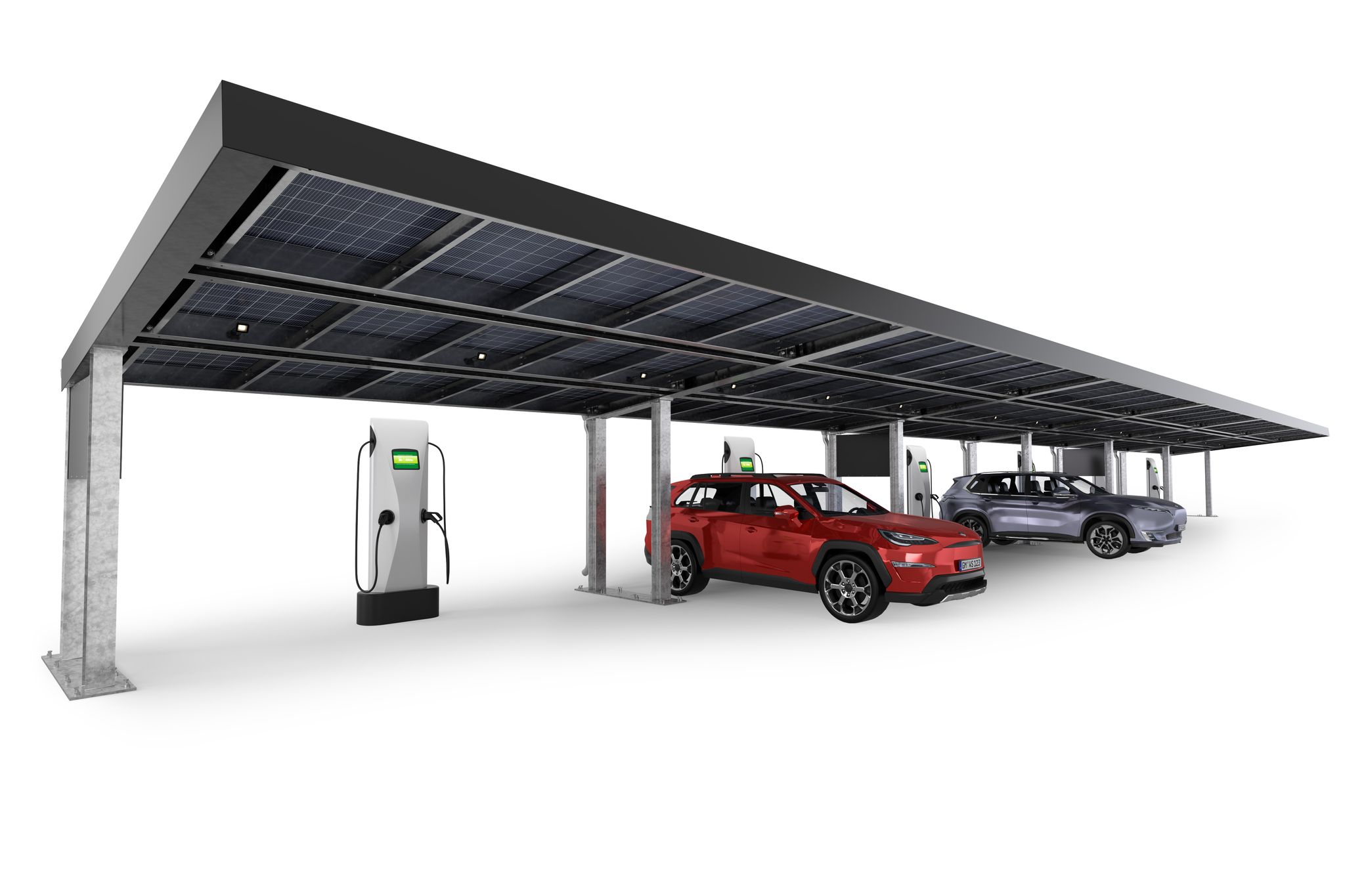
This brief documentation bundles current funding and framework conditions for the purchase of a solar carport and connected charging infrastructure in Germany - with a focus on North Rhine-Westphalia (NRW).

What support options are available?*
KfW loan "Renewable energies - Standard (270)"
Source: KfW, program page 270.
EEG remuneration / market premium
Source: Federal Network Agency (overview & remuneration rates, values to be applied in 2025).
Federal funding for charging infrastructure (BMDV/BMWK)
Source: BMDV Charging Infrastructure Guideline (publicly accessible), National Charging Infrastructure Control Center (NOW), PTJ pages on funding calls.
NRW - State funding (progres.nrw) for companies
Source: BRA.NRW state portals (modules "Charging infrastructure not accessible to the public"; "Fast charging infrastructure for commercially used commercial vehicles"), Info-Portal Elektromobilität.NRW.
What else speaks in favor of the mobility transition for companies*
NRW solar obligation for commercial parking spaces
Source: IHK Düsseldorf on mandatory PV parking spaces in NRW.
Economic efficiency & decarbonization
*All information on the guidelines and funding opportunities mentioned are without guarantee and are for guidance only; the respective guidelines/publications of the funding bodies are authoritative.
Wünschen Sie weitere Informationen?
Sie möchten mehr über förderfähige Investitionen erfahren? Melden Sie sich bei uns!